
Samsung DDR5 Server Memory: 16GB 4800 8Rx4 vs 32GB 5600 1Rx4 Differences | Capacity, Frequency, Rank Specs & Application Scenarios
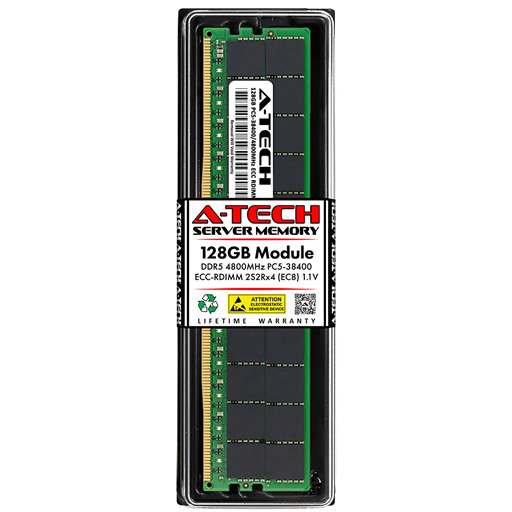
In data center and server hardware selection, choosing DDR5 ECC RDIMM server memory should not only focus on the two superficial parameters of capacity and frequency. Many users struggle to select between the two mainstream Samsung DDR5 server memory models: 16GB DDR5-4800 and 32GB DDR5-5600. In fact, the core differences lie in underlying hardware designs, including Rank specifications, particle architecture, bus load, and latency characteristics, rather than basic configurations.
These critical technical differences directly determine the multi-channel concurrent efficiency, operational stability, bandwidth performance, and platform compatibility of server memory, covering diverse computing, storage, and high-performance computing scenarios. This article comprehensively compares the core distinctions between Samsung 16GB 8Rx4 and 32GB 1Rx4 DDR5 server memory modules. It also analyzes their application differences and selection logic from three key dimensions: capacity, frequency, and Rank specifications.
1. Detailed Basic Specifications of Two Samsung DDR5 Server Memory Modules
Both products are genuine Samsung 288Pin standard DDR5 server memory sticks. They support ECC error correction, RDIMM register voltage regulation, and temperature monitoring. With a standard operating voltage of 1.1V, an operating temperature range of 0-85℃, and consistent warranty policies, both deliver reliable performance for standard server room environments. However, they feature significantly different core hardware architectures.
1.1 Samsung M321RBGA0B40‑CWK: 16GB DDR5-4800 8Rx4
This server memory module features basic specifications of 16GB capacity and DDR5-4800MHz (PC5-38400R) with a CL latency of CL40. It is a mainstream entry-level DDR5 server memory built with a multi-Rank architecture for stable capacity expansion.
Its defining feature is the 8Rx4 Rank configuration. The 8R means the single memory module integrates 8 independent Ranks, while x4 indicates each memory particle has a 4-bit width. This multi-Rank stacking design achieves standard rated capacity through combined multi-group particle arrays, eliminating the need for ultra-high-density memory particles. It adapts to conventional supply chain systems and reduces overall hardware adaptation costs.
Nevertheless, this design has obvious limitations. The 8-Rank architecture substantially increases the electrical load on the memory bus and imposes higher requirements on the driving capability of the server memory controller. This restricts high-frequency operation, making the module prioritize stable capacity expansion over extreme bandwidth performance.
1.2 Samsung M321R4GA0PB0‑CWM: 32GB DDR5-5600 1Rx4
This upgraded memory module boasts superior basic specifications: 32GB large capacity and DDR5-5600MHz (PC5-44800R) with a CL latency of CL46. It outperforms the 16GB model in both capacity and native frequency, serving as a high-performance DDR5 server memory focused on high frequency and high bandwidth.
It adopts a streamlined 1Rx4 single-Rank design, with only one independent Rank per module and the same 4-bit particle width. The single-Rank structure greatly reduces the electrical load of the memory bus, simplifying the addressing and driving logic of the memory controller without complex signal conditioning. This enables stable operation at higher frequencies.
Equipped with ultra-high-density memory particles, this module achieves 32GB large capacity via a single particle array, balancing large capacity, low bus load, and high operating frequency. The only trade-off is the increased CL latency from 40 to 46, resulting in a slight rise in single-access memory delay.
2. Core Technical Differences: Rank Architecture Determines Performance Trade-offs
The essential difference between the two Samsung DDR5 server memory modules stems from two distinct hardware design philosophies:multi-Rank stacking for capacity expansion and single-Rank high-density high-frequency optimization, which constitute the core criteria for server memory selection.
The 16GB DDR5-4800 8Rx4 model adopts low-density memory particles and achieves rated capacity through 8 stacked Ranks. It delivers better hardware fault tolerance and expansion compatibility, ideal for scenarios prioritizing stable capacity expansion. Its drawbacks include higher controller computing pressure, increased bus signal interference, limited high-frequency support, and a capped bandwidth ceiling.
The 32GB DDR5-5600 1Rx4 model doubles its capacity via high-density memory particles and a single-Rank architecture. The low electrical load of the single-Rank design supports stable operation at 5600MHz, delivering a significant improvement in theoretical data transmission bandwidth for high-throughput scenarios. The downside is slightly increased timing latency, making it less suitable for ultra-latency-sensitive lightweight business scenarios.
3. Application Scenario Differences Based on Parameter Variations
Capacity, frequency, Rank specifications, and latency differences lead to targeted application scenarios for the two memory modules. Users can select the appropriate model based on server business types, computing power requirements, and hardware platform characteristics.
3.1 Applicable Scenarios for 16GB DDR5-4800 8Rx4
This multi-Rank memory features powerful multi-channel interleaved concurrent performance, high expansion stability, and low hardware adaptation thresholds. The 8 independent Ranks enable interleaved memory read and write operations, effectively improving the concurrent processing efficiency of the memory subsystem in multi-threaded and multi-task scenarios.
It is widely applicable to general enterprise servers, file storage servers, background business servers, virtualization multi-instance deployment, and lightweight cloud hosts. These scenarios have low requirements for memory bandwidth and operating frequency but demand stable continuous read-write performance and sufficient memory channels. It is also compatible with older server motherboards with limited high-frequency memory support.
Note that some high-end server motherboards have limited compatibility with high-Rank memory modules. Always verify the official motherboard compatibility list before selection to avoid frequency reduction and system instability issues.
3.2 Applicable Scenarios for 32GB DDR5-5600 1Rx4
This single-Rank high-frequency memory excels in high bandwidth, low bus load, large capacity, and high-frequency stability. Compared with 4800MHz memory, the 5600MHz high frequency greatly enhances theoretical data throughput, making it the preferred choice for high-performance computing scenarios.
It is highly suitable for bandwidth-sensitive businesses including AI inference computing, HPC (High-Performance Computing), big data analysis, cloud computing nodes, video encoding and decoding, and high-frequency database read-write operations. The single-Rank low-load architecture reduces signal loss, ensures stable high-frequency operation, and significantly improves overall computing efficiency for high-throughput businesses.
Although the CL46 latency is slightly higher than CL40, the performance gains from high bandwidth far offset the minor latency increase in most high-throughput scenarios, enabling overall performance superior to low-frequency multi-Rank memory.
4. Core Selection Criteria for Samsung DDR5 Server Memory
Based on the technical differences and application scenarios of the two modules, four practical selection principles are summarized for data center expansion and new server deployment:
1. Determine stability and load via Rank specifications: High-Rank (8Rx4) memory is preferred for large-capacity expansion, multi-task concurrency, and old platform compatibility; low-Rank (1Rx4) memory prioritizes high-frequency operation, low bus load, and high bandwidth output.
2. Balance business demands with frequency and latency: Prioritize high-frequency DDR5-5600 for bandwidth-sensitive businesses (AI, HPC, big data); choose low-latency CL40 DDR5-4800 for ultra-latency-sensitive and lightweight stable businesses.
3. Identify hardware characteristics via particle architecture: Multi-Rank modules adopt low-density particles with dispersed heat dissipation and flexible expansion; single-Rank modules use high-density particles with higher integration, better high-frequency stability, and uniform power consumption distribution.
4. Take platform compatibility as the final standard: Both modules feature a standard 288Pin physical interface, but high-Rank memory has platform adaptation limitations. Always check the official compatibility list of the server motherboard to ensure full nominal parameter operation and long-term stable performance.
Conclusion
The Samsung 16GB DDR5-4800 8Rx4 and 32GB DDR5-5600 1Rx4 server memory modules are not a simple iterative upgrade of larger capacity and higher frequency. Instead, they represent two targeted positioning designs: stable multi-concurrent capacity expansion and high-frequency high-bandwidth computing. The 8Rx4 multi-Rank architecture focuses on stability, compatibility, and multi-task concurrency for general enterprise server businesses, while the 1Rx4 single-Rank architecture delivers high performance and high throughput for high-end computing and data processing scenarios. Matching Rank specifications, frequency, and capacity with actual business needs maximizes the performance and application value of DDR5 server memory.