
A New King Ascends: GeForce RTX 5090, the All-Around Flagship of the Blackwell Era
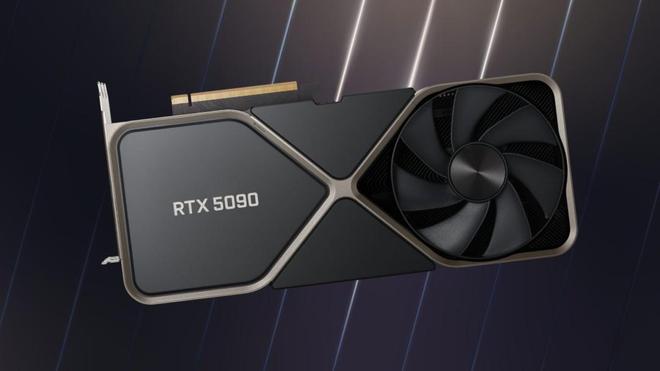
Across the long arc of consumer graphics-card generations, every RTX 90 flagship has represented the ceiling of NVIDIA's consumer GPU technology at that moment. With the arrival of the Blackwell architecture, the GeForce RTX 5090 takes the scepter from the RTX 4090, raising the performance bar once again for ray-traced gaming, AI inference, and content creation — making it the ultimate choice for hardcore gamers, 3D creators, and local-AI enthusiasts.
The core foundation of the RTX 5090 is the all-new Blackwell architecture. This generation was no longer designed with traditional rasterization performance as its sole priority; instead, it was rebuilt around neural rendering as the central goal, redesigning the SM (Streaming Multiprocessor) so that Tensor cores, RT cores, and shading units work in deep coordination to serve a new generation of workloads such as DLSS, AI generation, and neural materials. The chip integrates roughly 92 billion transistors — the largest transistor count of any consumer GPU NVIDIA has ever produced — laying a hardware foundation aimed directly at the gaming and AI demands of the coming years.
On the hardware spec sheet, the RTX 5090 packs 21,760 CUDA cores, fifth-generation Tensor Cores, fourth-generation ray-tracing cores, and a boost clock of up to 2.41 GHz; it carries 32 GB of GDDR7 high-speed memory with 1,792 GB/s of bandwidth. Compared with the previous generation's 24 GB of GDDR6X on the RTX 4090, the larger capacity and higher bandwidth are precisely what give it its key advantages in 8K gaming, local deployment of large models, 4K/8K video editing, and rendering massive scenes in Blender or Maya. The fifth-generation Tensor Cores deliver 3,352 AI TOPS, and the addition of the FP4 low-precision format dramatically reduces the cost of local large-model inference — letting a consumer graphics card run larger AI image-generation models and LLM workloads smoothly.
The upgrade players care about most is undoubtedly DLSS 4. This generation of super-resolution technology introduces Multi Frame Generation — no longer limited to single-frame interpolation — and, working in tandem with Blackwell's neural rendering units, official figures show that with DLSS 4 enabled, RTX 5090 gaming performance can reach up to twice that of the RTX 4090. In heavy full ray-tracing/path-tracing scenarios such as Cyberpunk 2077, it can still deliver high, smooth frame rates at 4K, while Reflex low-latency technology keeps input lag down — so even esports-minded players can run high-quality ray-traced modes with lower latency, breaking the old assumption that "ray tracing = stuttering."
Beyond gaming, the RTX 5090 is a potent desktop AI workstation. Image generation with models like Stable Diffusion and Flux is dramatically faster, and video generation, AI background replacement, AI upscaling/restoration, and local LLM chat can all be handled on this card without depending entirely on the cloud. For creators, the new NVENC encoder supports higher-spec video encoding, so editing, color grading, and real-time preview of 4K and 8K high-bitrate footage no longer stutter constantly; in ray-traced renderers, the fourth-generation RT cores accelerate path tracing, significantly shortening render times for complex product visualization, architectural visualization, and film previsualization.
Worth noting: the Founders Edition RTX 5090 abandons the previous generation's chunky three-slot design and returns to a two-slot thickness, making case compatibility far friendlier — many mid-tower cases can accommodate it without modification, lowering the barrier to building a flagship system. The power connector continues to follow the newer 12VHPWR standard, though the extremely high performance ceiling means power draw and cooling pressure are not to be taken lightly; high-end third-party models typically bring multi-fan, massive heatsink assemblies to hold sustained full-load clocks.
Of course, as a flagship, the RTX 5090 has clearly defined boundaries. Its launch price is steep, so it is by definition not the value pick for ordinary 1080p gamers. If you only play 1080p online titles, an RTX 5070 or 5080 is already more than enough; only users chasing 4K/8K full ray-traced gaming, heavy 3D rendering, or long-term local AI model runs can truly extract everything this card has to offer. At the same time, the surrounding platform cannot be a weak link: a high-performance CPU, ample memory, a high-wattage quality PSU, and good case airflow are all essential prerequisites for unleashing its potential.
From the RTX 20 series ushering in the era of real-time ray tracing, to the RTX 40 series bringing frame generation, to the RTX 5090's Blackwell and DLSS 4, NVIDIA's direction is already unmistakable: a GPU is no longer just a gaming graphics card, but a general-purpose parallel-computing terminal that fuses rasterization, ray tracing, and AI neural rendering. The RTX 5090 is the culmination of that path — it brings AI compute and rendering capability that once belonged only to professional workstations down into the consumer market.
It is not merely "a faster gaming graphics card," but a window onto neural rendering and local AI. Over the coming years, as more titles supporting DLSS 4, path tracing, and AI neural materials arrive, the value of the RTX 5090 will be gradually unlocked. For players and creators who pursue the extreme and are willing to pay for cutting-edge technology, it is, right now, the uncrowned king of consumer graphics cards.
If you'd like, I can also write a shorter social-media news-brief version, or a piece leaning toward hardware-review comparison style.